
Deconstructing the Eslimi: The History Behind the Persian Spiral
Discover the history of the Eslimi pattern, its philosophical roots in infinity, and how Niloofar K. Afshar reinterprets this ancient form at Nilpar Gallery.
ART HISTORYSTUDIO INSIGHTS
Deconstructing the Eslimi: The History Behind the Spiral.
If you look closely at the heart of any Persian masterpiece—be it the silk weave of a 16th-century carpet from Tabriz or the mesmerising tilework of the Sheikh Lotfollah Mosque—you will find a single, rhythmic line. It creates a heartbeat within the art, a vine that seems to have no beginning and no end.
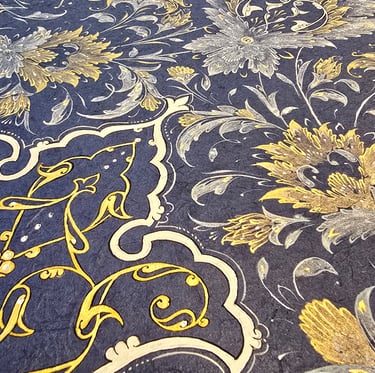
Often translated simply as "Arabesque" in the West, this form is known to us as the Eslimi. To the untrained eye, it is merely a decorative vine. But to the student of history and philosophy, it is the visual language of the infinite.
In the Nilpar Gallery collection, artist Niloofar K. Afshar does something radical with this ancient form: she breaks it. To understand the profound power of her "deconstructed" style, we must first appreciate the perfection she is dismantling.
The Roots of the Spiral
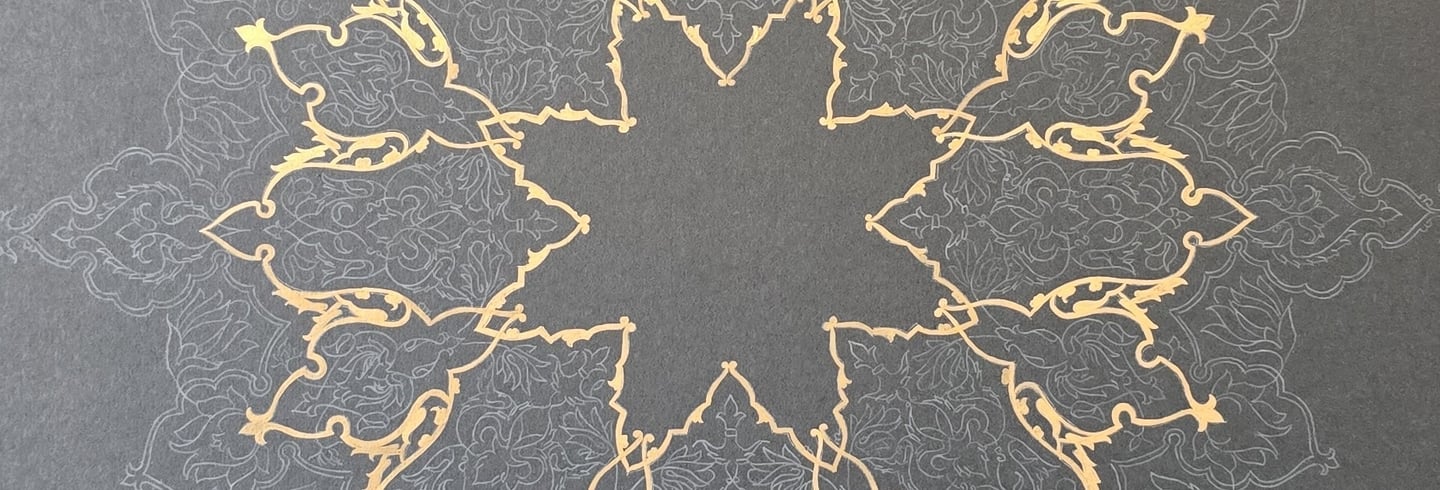
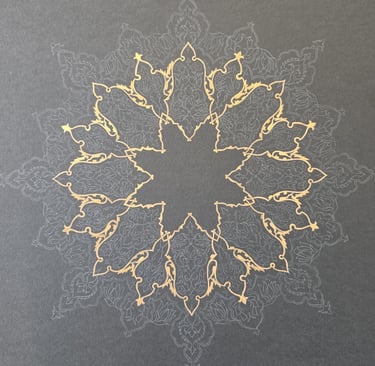
The term Eslimi (or Islimi) refers to the rhythmic, scrolling patterns of interlacing foliage tendrils, leaves, and vines that spiral outward in complex mathematical harmony.
While popularly associated with the golden age of Islamic art from the 9th century onwards, it has roots that extend into antiquity. The Eslimi draws its breath from the pre-Islamic acanthus scrolls of the Sassanian Empire and the intricate vine motifs of Byzantium.
By the 11th century, these natural forms had evolved into a distinct, stylised abstraction. The leaves were no longer just leaves; they became symbols of vital energy, stripping away nature's imperfections to reveal the mathematical truth beneath.
The Philosophy of the Infinite
Why the spiral? Why the repetition?
In traditional Persian philosophy, the Eslimi represents the infinite nature of creation. Because the pattern has no visible starting point and can theoretically continue forever beyond the frame of the artwork, it symbolises the divine—a realm without boundaries.
It creates a "Garden of Paradise," a space of perfect order and unity where every curve flows logically into the next. It is art that mimics the laws of nature: structural, rhythmic, and life-giving. It reminds the viewer that, amidst the chaos of the human experience, there is an underlying order to the universe.
The Modern Deconstruction
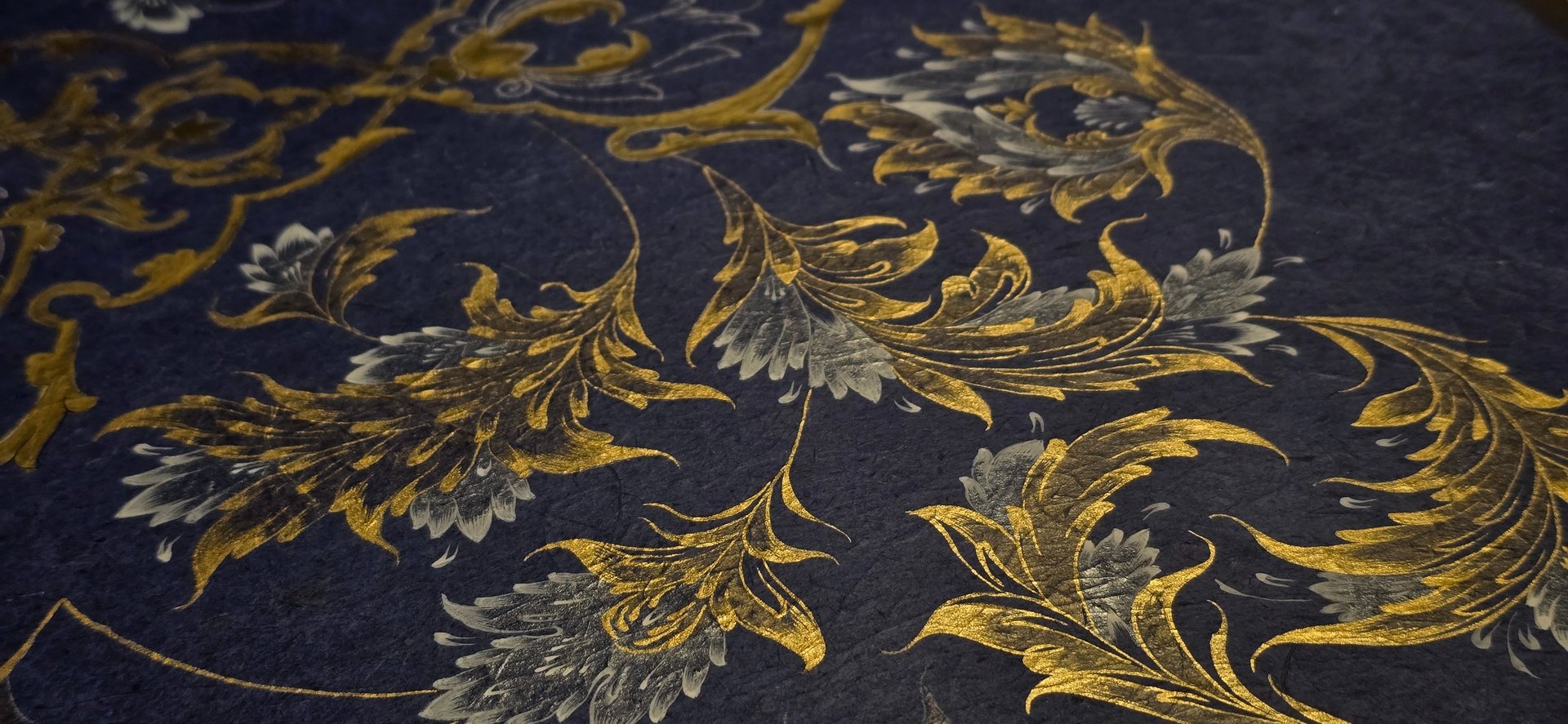
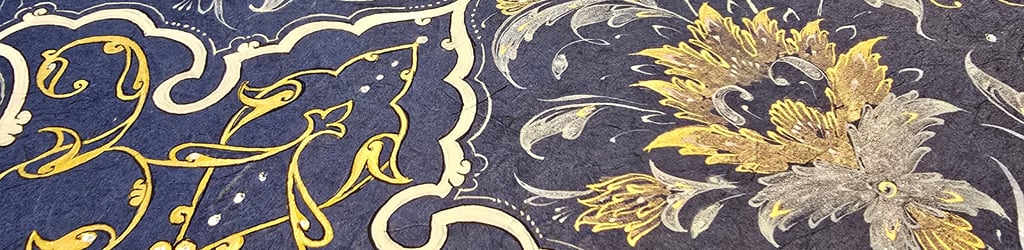
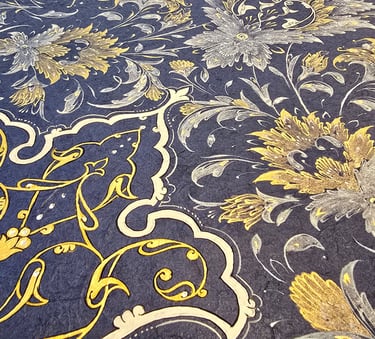
It is here, at the intersection of ancient order and modern emotion, that we find the contemporary works of Niloofar K. Afshar, particularly in pieces such as Sapphire Garden and Echoes of Two Souls.
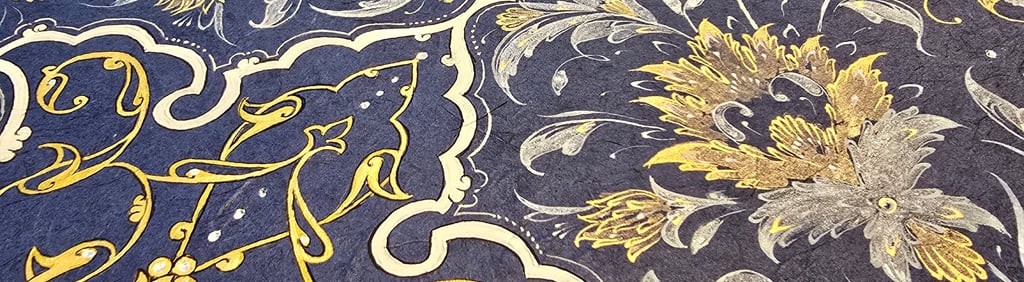
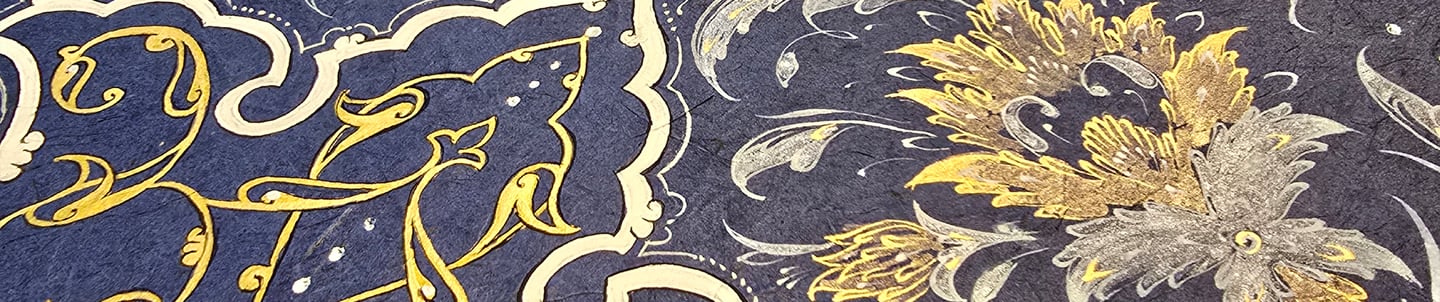
Niloofar's technique is one of deconstruction. Instead of presenting the perfect, unbroken loop of tradition, she isolates the motif. She magnifies a single curve or breaks the vine, rendering it in textured 24k Gold Leaf against a negative space of deep acrylics.
This act of breaking the spiral is not a rejection of heritage, but a poetic reimagining of it. It mirrors the modern diasporic experience. For many of us, the memory of "home" is not a continuous, unbroken narrative. It is experienced in brilliant, fragmented moments—flashes of gold amidst the void.
By isolating the Eslimi, Nilpar Gallery invites the collector to look at the form not just as a background "pattern," but as a sculpture on canvas. We see the curve's weight. We feel the texture of the gold. We know the history of the spiral, not as a relic of the past, but as a living, breathing element of modern design.
We invite you to pause and trace the line. In the break, there is beauty.
© 2025 Nilpar Gallery — All Rights Reserved.
Join the Collector's Circle
Occasional updates on new works, exhibitions, and writing.