
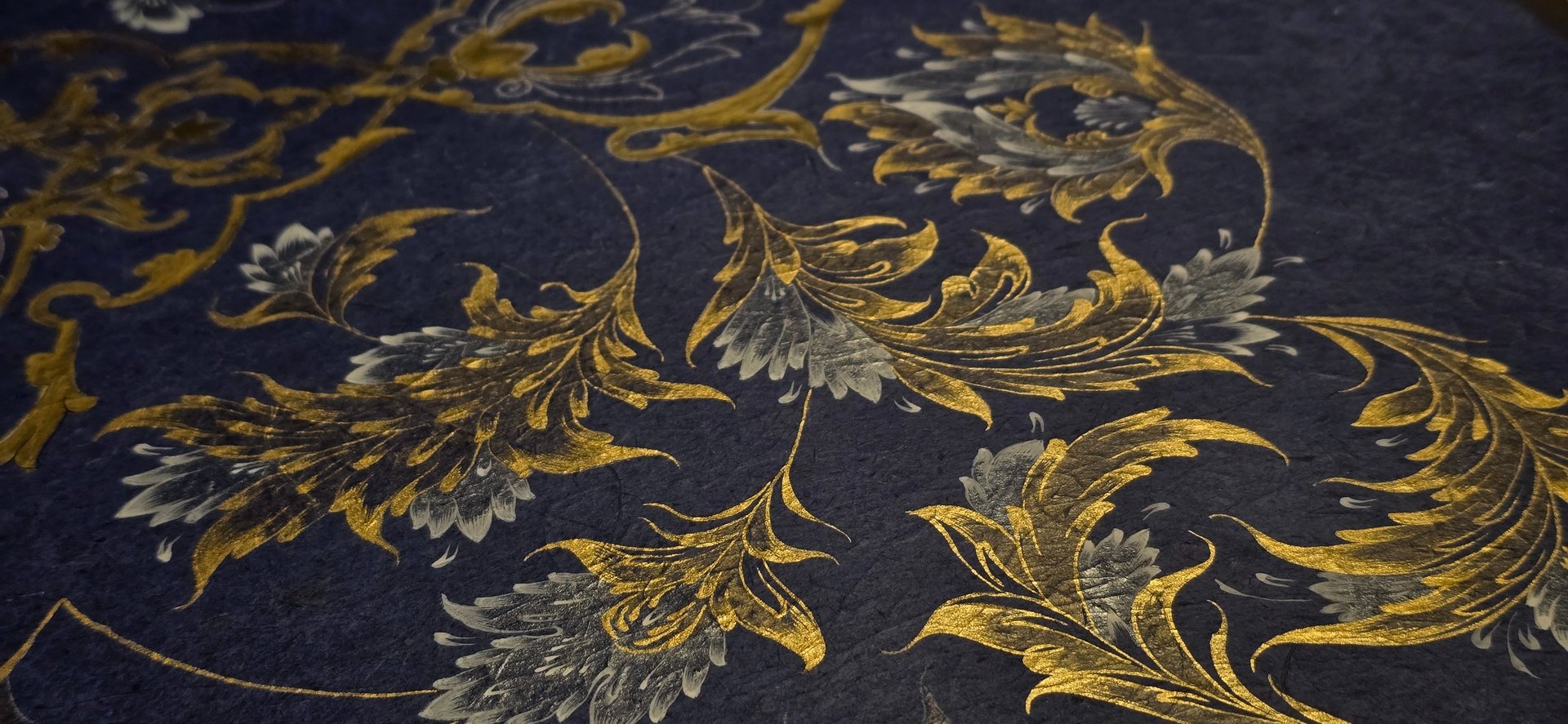
Gardens of Fire: The Alchemy of Red and Gold in Persian Art
Explore the controlled energy of red and the luminosity of gold in Persian ornamentation. A look at how warm palettes create Gardens of Fire, renewal and resilience.
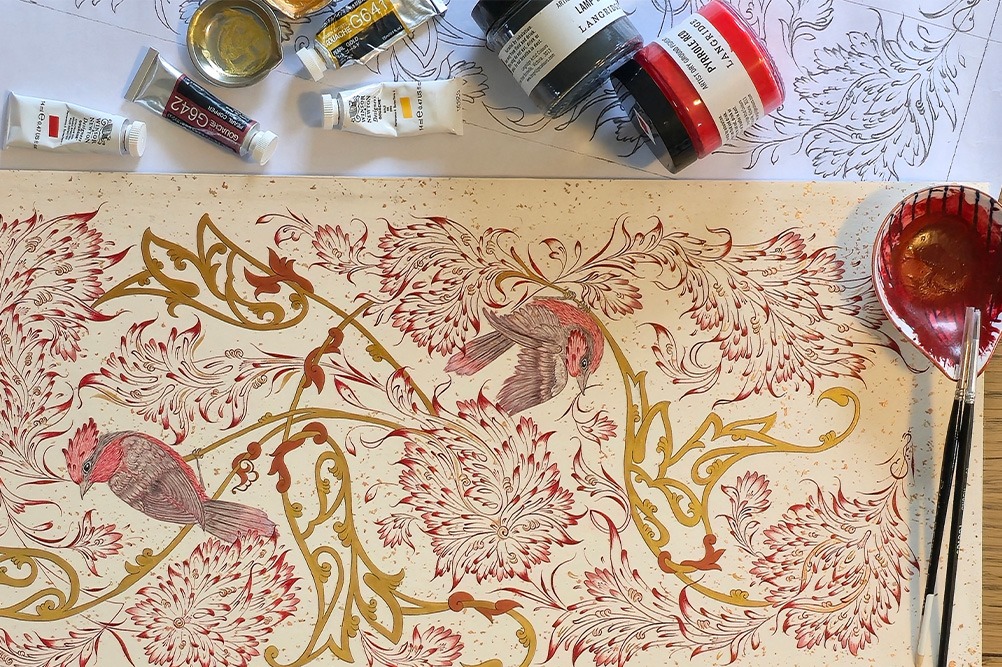
The Spark of Creation
There is a moment in the study of illumination Tazhib in which the artist must determine the piece's temperature. While turquoise and lapis lazuli whisper of the infinite sky, the warm palette speaks of the earth, the blood, and the beating heart.
To look upon a composition dominated by crimson and gold is to witness a "Garden of Fire." Yet, in the Persian aesthetic tradition, fire is not merely destructive; it is the agent of alchemy. It is the heat that turns clay into ceramic and raw metal into purity. As we observe the intricate dance of floral arabesques in these warm tones, we are not observing chaos, but a suspended, vibrant vitality.
Red: The Pulse of Presence
In the notes of our latest curation, we reflect on red not as a colour of aggression, but as the anchor of life force.
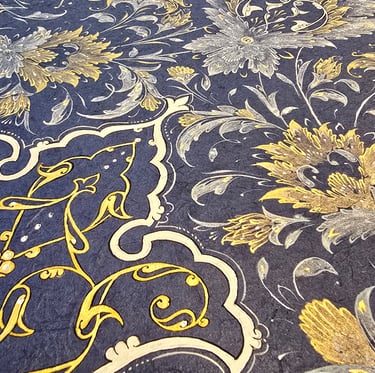
In the intricate Gol-o-Morgh (Bird and Flower) styles, red petals are rarely flat. They are layered, with deep ruby at the centre and soft vermilion at the edges. This grading technique creates a sense of breath. In visual compositions, red immediately draws the eye, grounding the viewer in the physical realm. It is the "pulse" of the artwork—a reminder that beauty is a living, breathing entity.
Curator’s Note: Notice how the red in the artwork avoids harshness. It is used with intention, becoming a rhythmic beat rather than a demanding shout.
Gold: The Luminosity of Balance
If red is the heat, gold is the light that tempers it.
In the philosophy of patterns, gold (often real gold leaf in traditional manuscripts) represents the divine intellect—a clarity that transcends the physical world. When gold outlines the fiery red of a Saz leaf or a Khatai flower, it introduces a necessary pause.
Its reflective quality catches the ambient light, changing as you move around the piece. This luminosity prevents the warmth of the red from becoming overwhelming. It contains the energy, holding it in a state of perfect equilibrium. Gold tells us that passion (red) must always be guided by wisdom (gold).
Contemporary Gardens of Warmth
How does this ancient interplay translate to contemporary life?
We often view our spaces as static, but the "Garden of Fire" concept suggests that our environments can be sources of transformation. In contemporary interpretations, we move away from literal landscapes and toward conceptual gardens.
This is the essence of the Ruby Garden. It is a space—whether on a canvas or within an architectural element—where red and gold operate as forces of renewal. It suggests that growth often requires heat and that resilience is beautiful. By integrating these warm, balanced palettes into modern design, we invite a spirit of transformation into our daily rituals.
A Reflection on Renewal
The beauty of the "Garden of Fire" is that it does not burn out; it endures. It reminds us that within the intricate intertwining of stems and feathers, there is order. There is a promise that energy, when held in ornament and restraint, creates a sanctuary for the soul.
We invite you to pause and find your own equilibrium in the details.
© 2025 Nilpar Gallery — All Rights Reserved.
Join the Collector's Circle
Occasional updates on new works, exhibitions, and writing.