
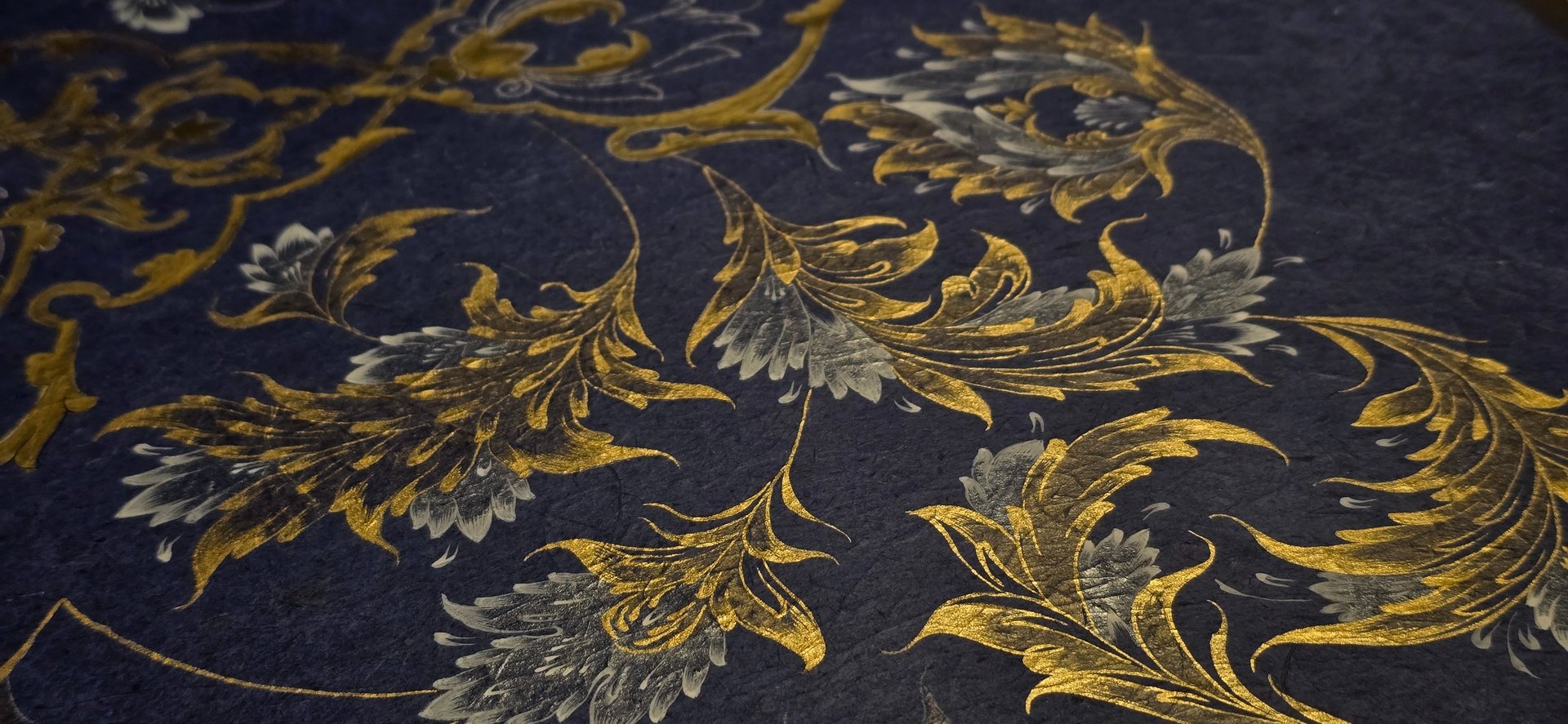
Gold as Light: The Luminous Soul of Persian Art
Gold as Light - Discover how gold in Persian art transcends ornament to become a symbol of divine light, silence, and spiritual presence. A look into the philosophy of Tezhib.
ART HISTORY
The Architecture of Silence
Imagine standing in the cool, dim interior of a 15th-century Timurid mosque. The air is still; the world outside feels miles away. As your eyes adjust to the shadows, a single shaft of light strikes a manuscript open on a lectern, or perhaps a tiled archway above. Suddenly, what looked like brown or grey ignites.
The gold does not just sit there; it wakes up. It catches the faintest glimmer and throws it back with an intensity that feels almost alive.
In the Western tradition, we often associate gold with wealth, status, and earthly power. But in the philosophy of Persian art, gold occupies a different realm entirely. It is not merely a precious metal. It is a material theology—a physical manifestation of Nur (Divine Light).
Beyond Ornament: The Mathematics of Light
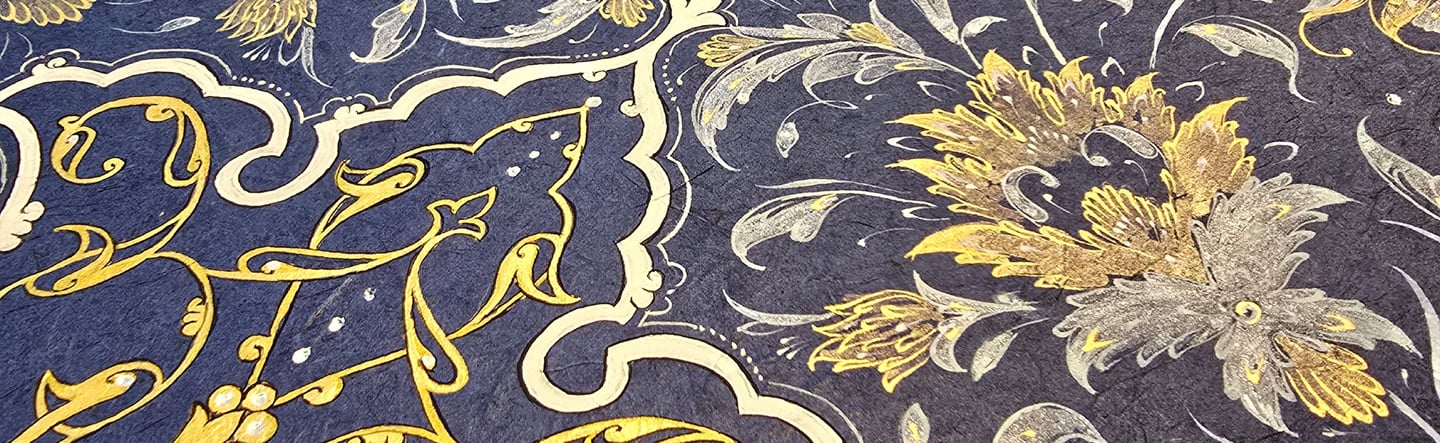
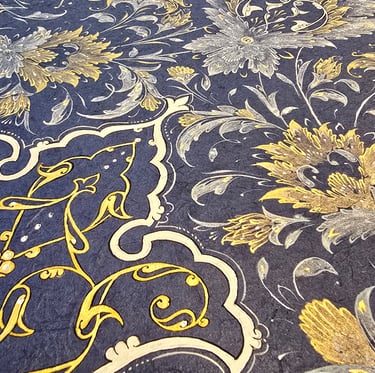
In the classical art of Tezhib (illumination), gold is never used incidentally. Its presence is calculated, geometric, and deeply symbolic.
The craftsmen of the past did not use gold to describe the physical world. You will rarely see a gold apple or a gold tree intended to look "real." Instead, gold was used to outline, to frame, and to illuminate the spaces between things. It resists shadow. Unlike pigment, which absorbs light to show you colour, gold reflects light to show you brilliance.
This optical quality allowed it to stand in for concepts that could not be easily depicted: divinity, breath, silence, and the infinite.
Curator’s Note: The application of gold was itself an act of devotion. To create shell gold (gold paint), an artist would grind gold leaf with honey and water for hours, sometimes days, until the metal was reduced to a fine, stardust-like powder. This labor was not a means to an end; the patience required was part of the prayer.
Light Held in Stillness: The Amen Bird
This philosophy of "gold as light" remains vibrant in contemporary Persian aesthetics, where the goal is often to quiet the noise of modern life.
Consider the Amen Bird (or Morgh-e Amen), a recurring motif in our collection. In Persian folklore, this mythical bird flies continuously, uttering "Amen" to the prayers and wishes of those below.
In modern interpretations, such as the ceramic works currently on view, gold does not dominate the bird. It is not plated in gold to show value. Instead, gold is used sparingly—perhaps just on the beak or the tip of a wing. It traces the moment of utterance. It is a breath within the composition, something sensed rather than announced.
When gold is used this way, in dialogue with matte surfaces and dark grounds, it creates a visual silence. It invites you to lean in, rather than step back.
A Modern Reflection
Why does this matter today? In a world of high-definition screens and constant visual noise, the subtle, reflective power of gold offers a remedy. It reminds us that beauty often lives in the quietest details.
We invite you to wander through the gallery this week, not just to look at objects, but to witness how they interact with the light. You might find that the most precious element in the room isn't the gold itself, but the stillness it creates around it.

© 2025 Nilpar Gallery — All Rights Reserved.
Join the Collector's Circle
Occasional updates on new works, exhibitions, and writing.