
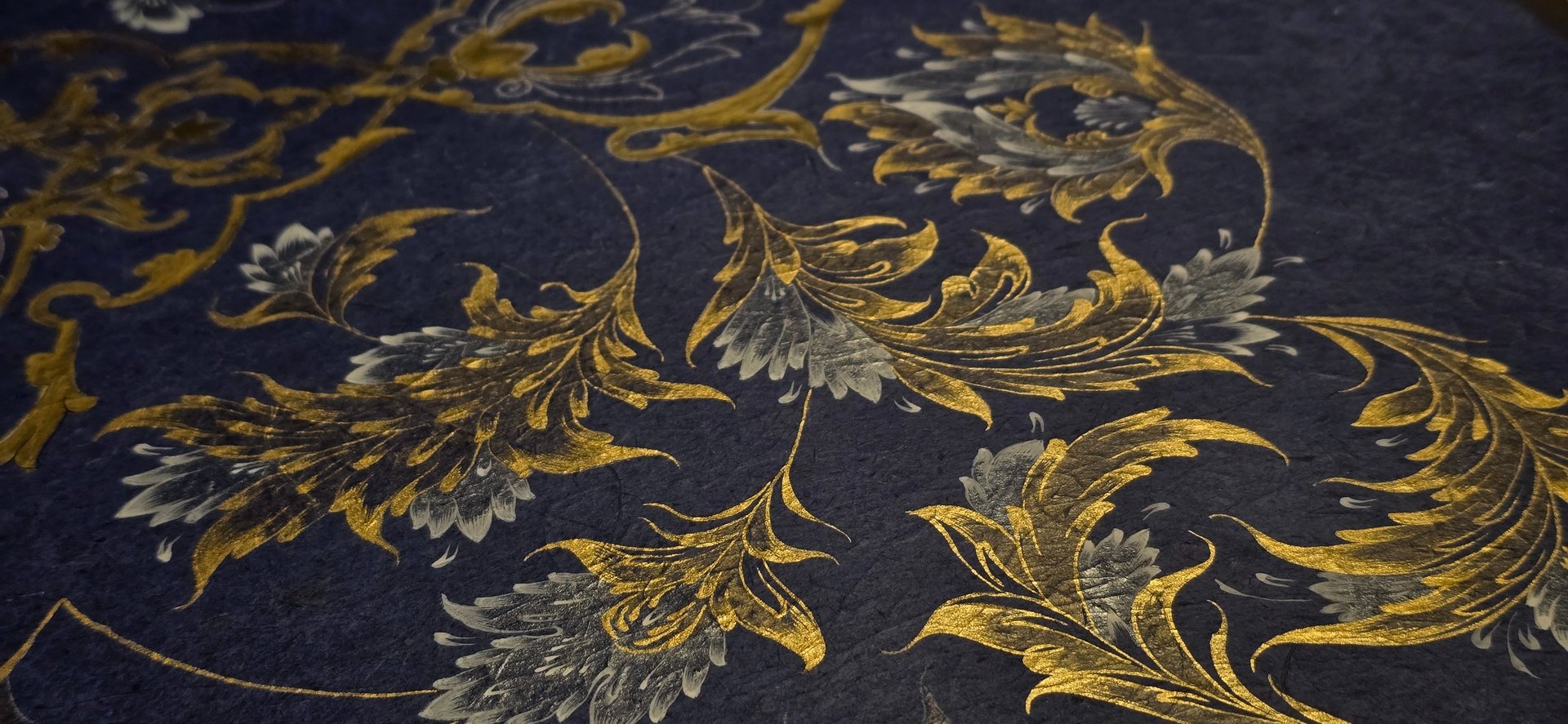
The Language of Gardens in Persian Art
The Chahar Bagh: Geometry of an Earthly Paradise Meta Description: Explore the sacred geometry of the Persian Garden. The Language of Gardens in Persian Art discover how the Chahar Bagh reflects the cosmos through symmetry, water, and ancient architectural wisdom.
ART HISTORY


The Language of Gardens in Persian Art: Gardens as Sacred Geometry
Imagine, for a moment, the heat of the central Iranian plateau. The sun is a relentless, golden weight upon the dust. But then, you step through a high archway, and the world transforms. The air temperature drops instantly. The chaotic noise of the bazaar fades, replaced by the rhythmic, melodic sound of water trickling through stone channels.
You have not just entered a garden; you have stepped into a mathematical equation for paradise.
In the Persian tradition, a garden is never merely a collection of plants. It is a mirror of the celestial realm, constructed with the rigorous precision of sacred geometry. It is here, amidst the scent of jasmine and the shade of cypress, that we find one of art history’s most profound dialogues between nature and order.
The Architecture of Paradise: The Chahar Bagh
At the heart of this tradition lies the Chahar Bagh (literally "Four Gardens"). This is not a random arrangement, but a deliberate imposition of order upon the wildness of nature.
The layout is fundamentally geometric, based on the square the symbol of the earth and material existence. This square is divided into four smaller quadrants by longitudinal and transverse water channels, meeting at a central pool.
This four-fold symmetry is deeply symbolic. Historically and spiritually, it represents the four rivers of life water, milk, honey, and wine described in ancient texts as flowing through the Garden of Eden (Pairidaeza, the etymological root of "Paradise").
The Mathematics of Beauty
The beauty of the Persian garden is not accidental; it is calculated. The layout relies on strict Cartesian logic centuries before Descartes. The ratio of the pools to the pavement, the height of the trees relative to the width of the walkways all adhere to geometric harmonies designed to guide the human eye toward the centre, toward unity.
When we gaze upon the intricate tile work lining these water channels, we see the concept of Kathrat dar Wahdat Multiplicity in Unity. The complex geometric stars and interlocking polygons in the tilework mimic the stars in the heavens, reflected in the water below. It is a reminder that the physical world (the garden) is but a reflection of the spiritual world.
Modern Relevance: Seeking Order in Chaos
Why do these ancient geometric structures still resonate with us today? In our modern era, often defined by visual noise and digital clutter, the Persian garden offers a blueprint for mental clarity.
Modern landscape architects and designers continue to draw upon the Chahar Bagh. We see echoes of this four-fold symmetry in contemporary urban parks and minimalist courtyards. The principle remains valid: the human mind finds respite in symmetry. The geometric division of space allows us to process our environment more easily, creating a psychological sense of safety and tranquillity.
The garden teaches us that true beauty is not wild; it is the harmonious balance between the organic and the geometric, the flowing water and the rigid stone.
A Reflection
To walk through a Persian garden is to walk through a living philosophy. It is a reminder that even in the harshness of the desert or the chaos of modern life we can create spaces of profound order and beauty.
At Nilpar Gallery, we are endlessly fascinated by these intersections of structure and spirit. We invite you to look closer at the patterns around you, to find the quiet geometry hidden in nature, and to appreciate the timeless pursuit of bringing heaven down to earth.
A Living Garden
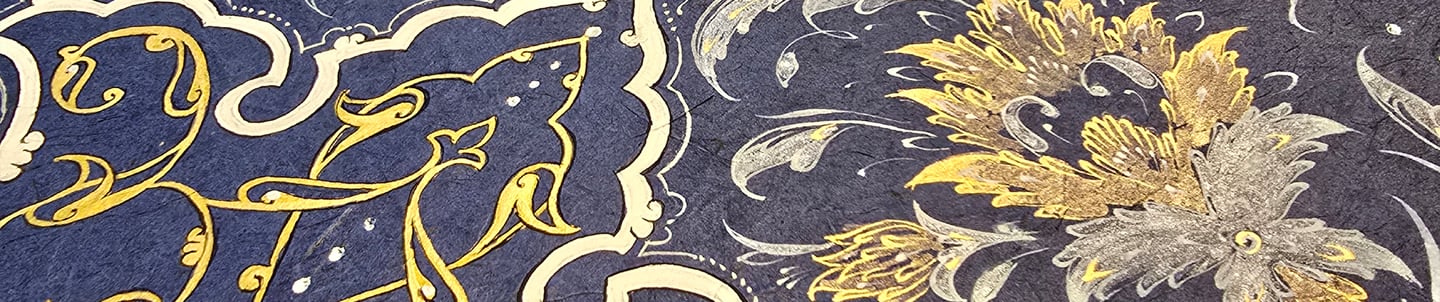
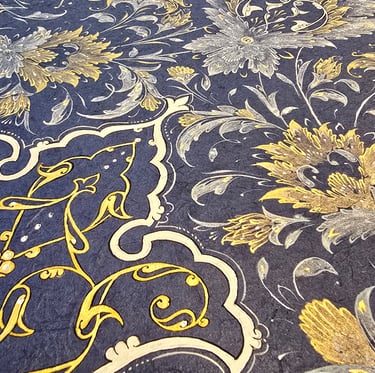
This lineage can be seen in works such as Sapphire Garden, where the structure of the illuminated garden is reimagined through contemporary colour and composition, allowing memory and symbolism to quietly unfold.
The Persian Garden endures not because it is nostalgic, but because it continues to offer a way of seeing measured, attentive, and deeply human.

© 2025 Nilpar Gallery — All Rights Reserved.
Join the Collector's Circle
Occasional updates on new works, exhibitions, and writing.