
The Silent Guardian: Birds in Persian Visual Culture
Explore the profound symbolism of The Silent Guardian: Birds in Persian art. Discover how these winged figures serve as guardians of the soul, bridging earth and sky.


The Narrative Hook: Between Earth and Sky
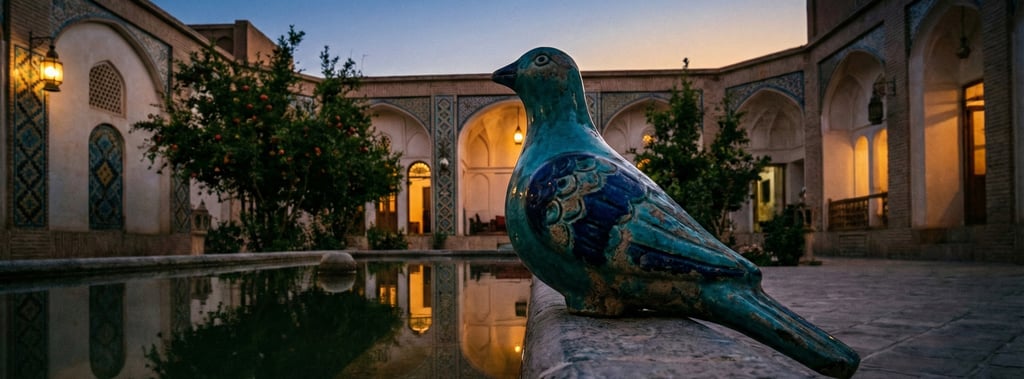
There is a distinct, hushed quality to a traditional Persian garden at twilight. The geometry of the water features reflects the darkening sky, creating a mirror between the heavens and the earth. In this space, where architecture seeks to impose divine order on nature, one figure often breaks the stillness without disturbing the peace: the bird.
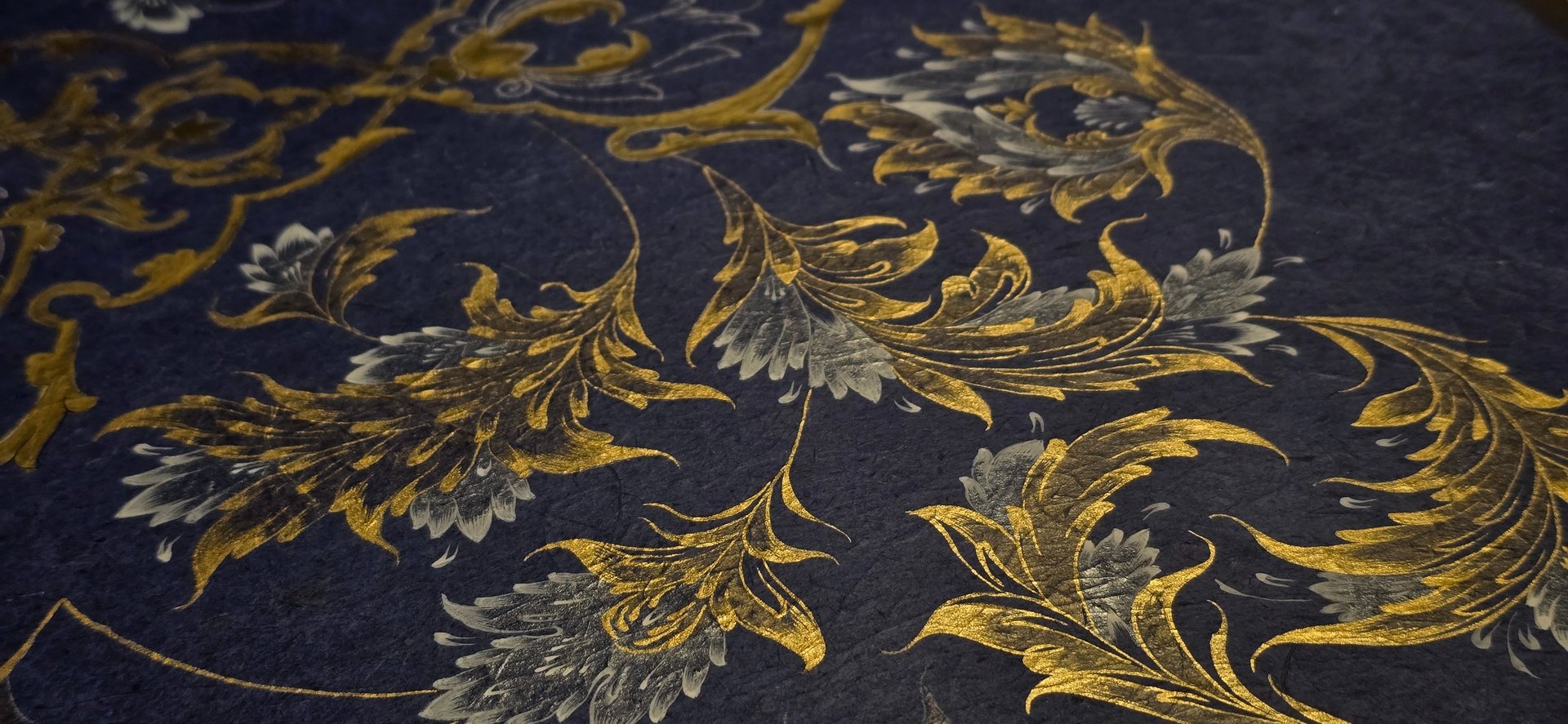
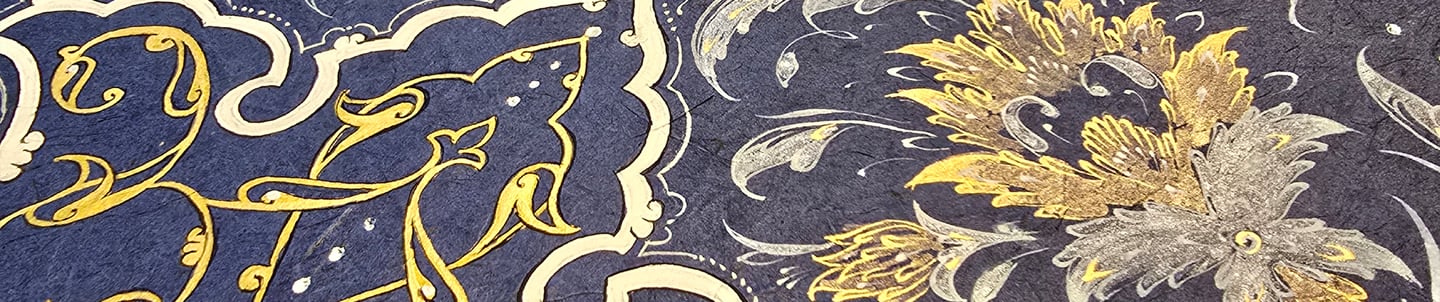
In Western art, a bird is often merely a study of nature or a decorative element. But in the lineage of Persian visual culture, a bird is rarely just a bird. It is a breath held in anticipation. It is a bridge. When you look closely at the intricate miniatures of the Safavid era or the glazed ceramics of Kashan, you notice that the birds are not fleeing; they are watching. They are the silent witnesses to the human condition, perched eternally on the threshold of the visible and the invisible.
The Educational Deep-Dive: The Mathematics of the Soul
To understand the bird in Persian art, one must understand the concept of the intermediary. In Persian mysticism and philosophy, reality is layered. There is the material world (earth) and the spiritual realm (sky). The bird, capable of traversing both, represents the flight of the human soul—the ruh—seeking its origin.
This is famously codified in the literary masterpiece The Conference of the Birds (Manteq-at-Tair) by the poet Attar, where thirty birds traverse seven valleys to find their sovereign, the Simurgh, only to realise that the divine presence they sought was within them all along.
However, beyond the narrative of the journey lies the visual language of Guardianship.
In architecture and sculpture, birds are often rendered with a distinct geometric solidity. They are grounded. A bird perched atop a standard or woven into a rug's motif serves as a protector. It represents the "Amen Bird" (Murgh-e Amen)—a mythical entity that flies continuously, waiting for a human wish to coincide with its passing presence. When the bird hears a wish and utters "Amen," that wish is granted.
However, the visual representation of this guardian is neither chaotic nor fluttering. It is composed of curves and resting lines. It embodies the mathematics of patience. The wing's curve often mirrors that of a dome, suggesting that the bird is not separate from the sacred space but an integral part of its structural harmony.
Modern Relevance: A Guardian in Stillness
Why does this ancient symbolism resonate so profoundly in our modern, accelerated lives? Perhaps it is because we have lost the art of waiting.
Contemporary design and art have revisited the motif of the Persian bird, stripping away the ornate details to reveal the essence of the form. In modern aesthetics, the bird—specifically the Amen Bird—is often rendered in sleek metals or monochromatic ceramics. It has shifted from the messenger narrative (one who brings news) to the guardian narrative (one who holds space).
This contemporary evolution is fascinating. The bird is no longer depicted in flight, but in a state of absolute stillness. It reminds us that protection and devotion are not always active deeds; often, they are acts of presence. To stand by someone, to witness a moment, to hold a wish in silence—these are the modern iterations of the ancient guardian.
Conclusion
The beauty of Persian art lies in its refusal to separate the beautiful from the meaningful. A bird is never simply a decoration; it is a prayer made visible. It is a reminder that while our feet are planted on the earth, our potential is limitless.
Whether rendered in the turquoise glaze of the 12th century or the polished steel of the 21st, the bird remains a symbol of quiet endurance. At Nilpar Gallery, we are deeply interested in this dialogue between the ancient soul and modern form. We invite you to pause, breathe, and observe these silent guardians in our collection, and perhaps, find a moment of your own stillness reflected within them.
A Guardian in Stillness
This lineage finds contemporary expression in Amen Bird, where the bird is rendered not in motion but in stillness. Here, guardianship is defined by presence rather than action, and devotion by patience rather than display.


© 2025 Nilpar Gallery — All Rights Reserved.
Join the Collector's Circle
Occasional updates on new works, exhibitions, and writing.