
The Silent Syntax: Why Persian Ornament is Language, Not Decoration
Discover The Silent Syntax, how Persian patterns function as a visual language. We explore how ornament structures meaning, emotion, and the infinite, beyond mere embellishment.
The Silent Syntax
Imagine standing beneath the vaulted arch of the Sheikh Lotfollah Mosque in Isfahan. As your gaze travels upward into the vast, spiralling lattice of the dome, you are not merely looking at "decoration." You are reading a text written in light and ceramic.
In the Western canon of art history, ornament is often treated as the "icing on the cake"—a superficial layer applied to a structure to make it pleasing. It is considered secondary to the form itself. However, in the Persian aesthetic tradition, this hierarchy does not exist. Here, ornament is the form. It is physics that holds the visual world together.
To view these patterns merely as pretty shapes is to miss the conversation entirely. Today, we explore how geometry functions as a language—a silent syntax that speaks of unity, order, and the infinite.
The Architecture of Meaning
If we accept that a landscape painting tells a story through representation, we must accept that a geometric pattern tells a story through relationship.
In Persian visual philosophy, repeated motifs function as visual sentences. The rhythm of a girih (knot) pattern, the breathing space between interlaced lines, and the variation of scale all convey emotion and intention. This is what we call Visual Syntax.
Consider the mathematics of these structures. A pattern is not static; it is a capture of motion. It suggests that the design continues beyond the frame, extending into infinity. This concept mirrors the philosophical idea of Tawhid (unity)—the notion that all existence is connected.
When an artist lays down a geometric grid, they are not covering a space; they are revealing the hidden structure of the universe. The absence of figurative narrative—no faces, no mountains—does not imply emptiness. Instead, it offers a "clearance," a space where the viewer can enter without instruction. The pattern does not dictate what you should feel; it provides the harmonic structure for you to feel it.
"Pattern is not applied to embellish form; it is the form."
Emotional Geometry in Modernity
How does this ancient language translate into contemporary life?
In modern design, we often gravitate toward minimalism, fearing that ornament implies clutter. Yet, true Persian ornament is the opposite of clutter; it is the ultimate expression of order.
Contemporary artists are now reclaiming this "Emotional Geometry." They use ornament to address complex emotional states without relying on the crutch of figurative storytelling. A tight, dense, repetitive pattern may evoke feelings of constraint, tension, or intense focus. Conversely, a composition that opens up, allowing the underlying grid to breathe, suggests release, expansion, and freedom.
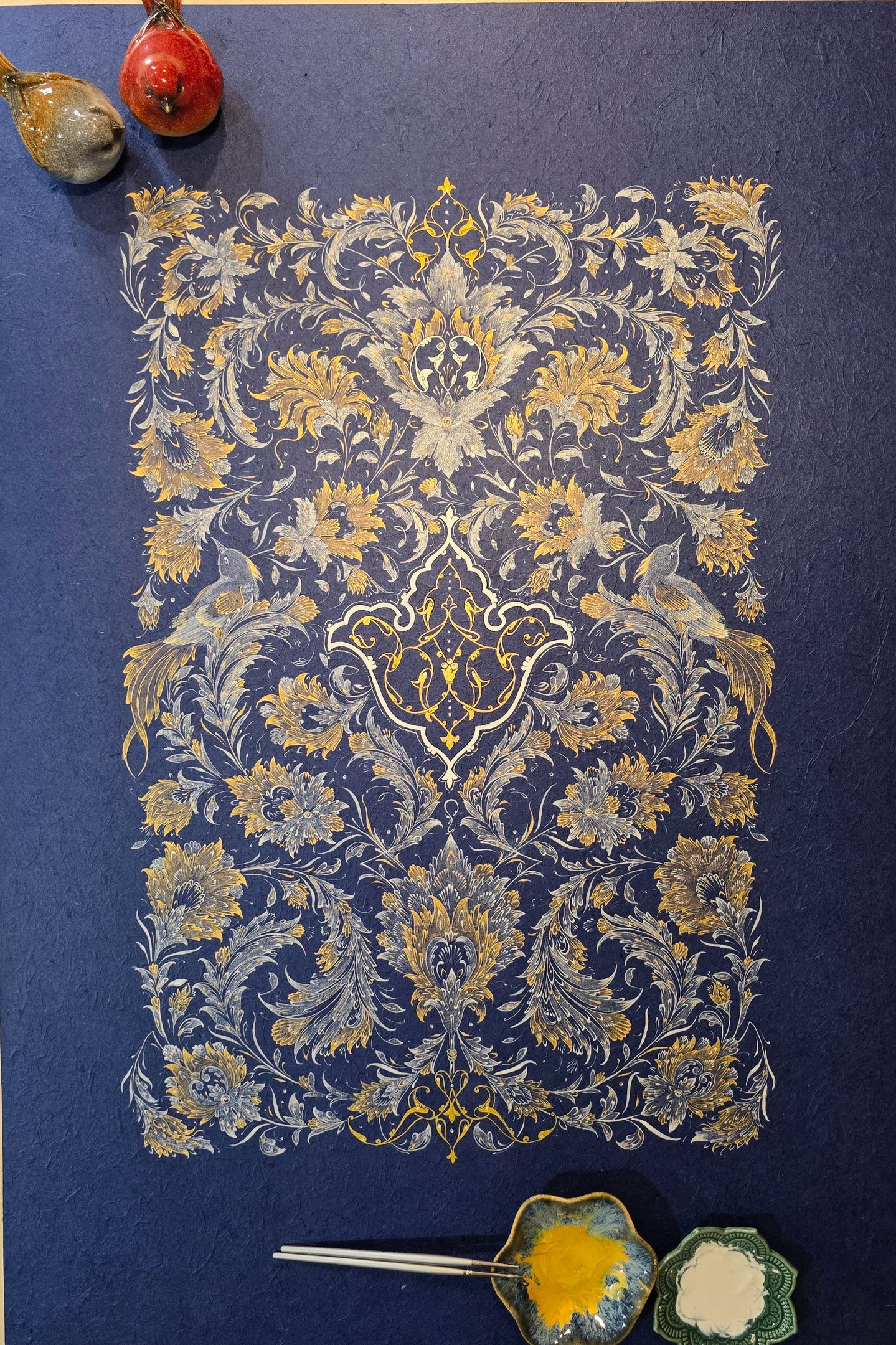
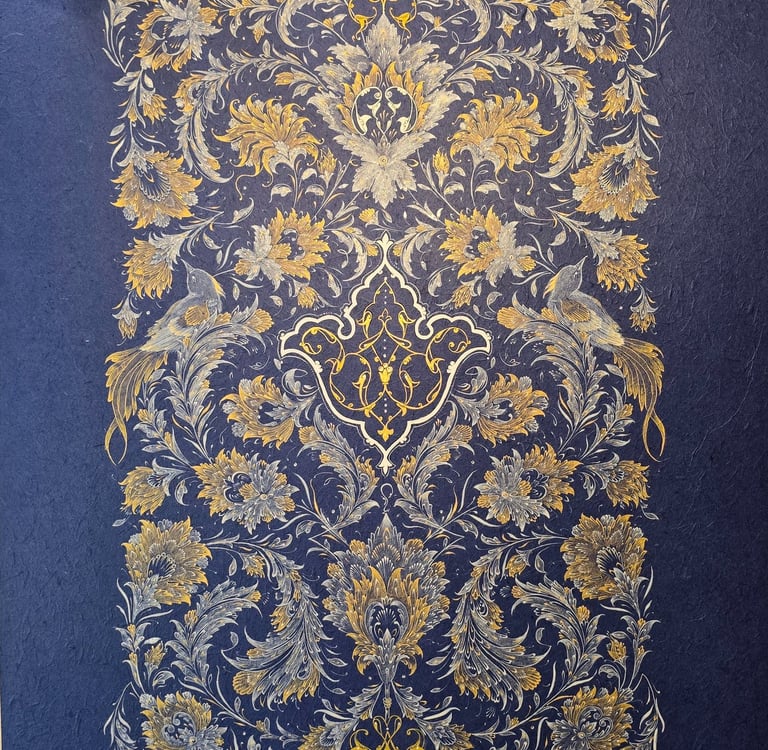
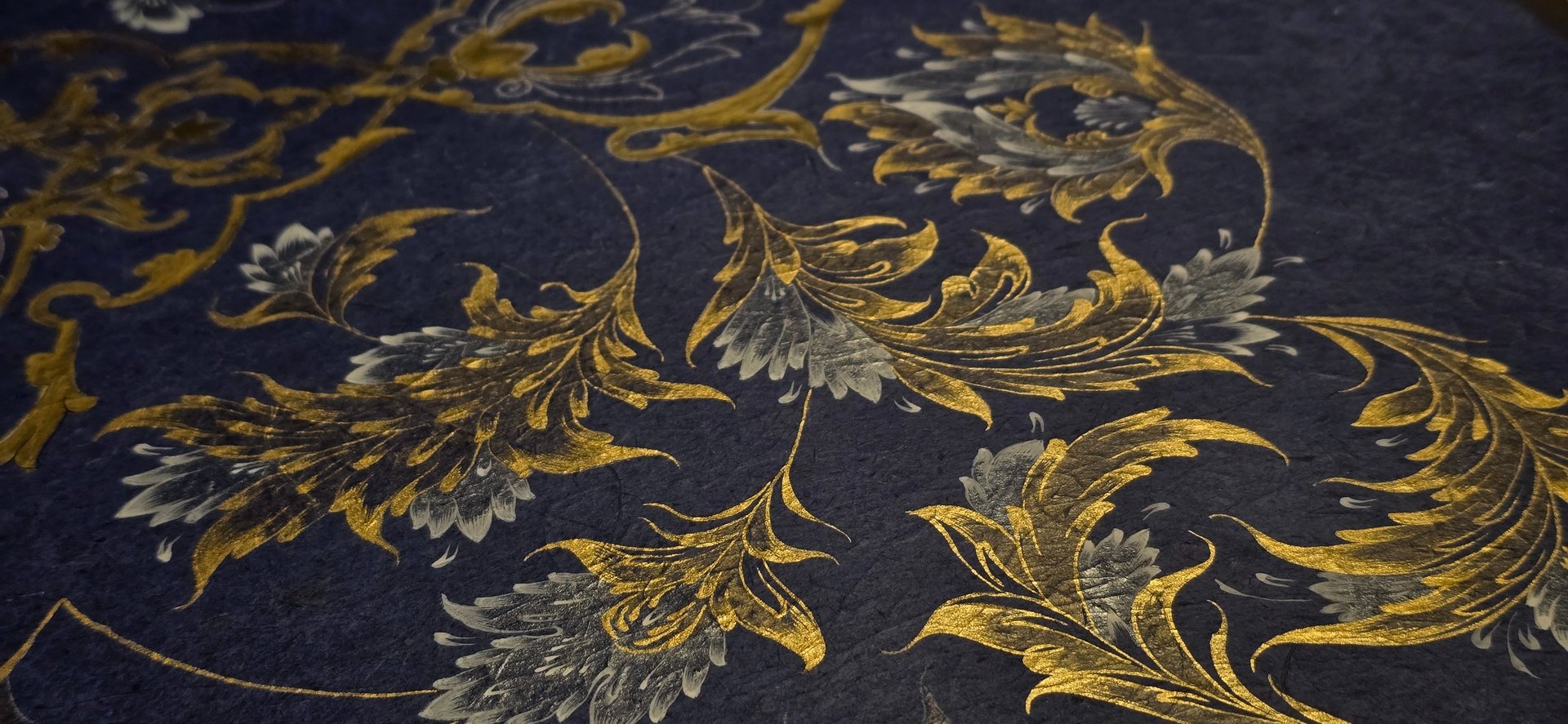
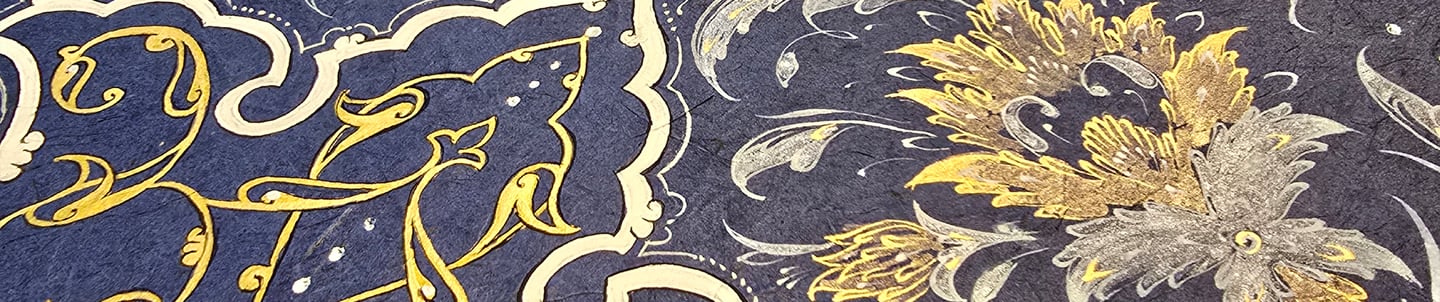
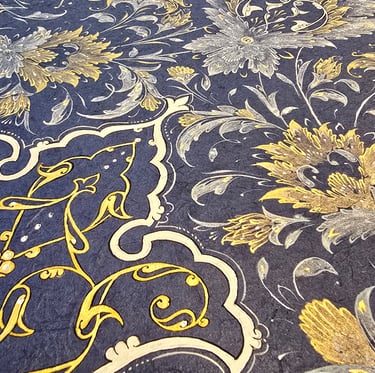
You can see this in works such as Echoes of Two Souls, where ornament functions as a language that both bridges and divides. The pattern becomes a vessel, carrying emotion rather than merely depicting it, inviting the viewer to discover their own reflection within the geometry.
Shared Language
This approach is visible in Echoes of Two Souls, where ornament operates as a language of connection and separation. Pattern becomes a means of holding emotion rather than illustrating it.
© 2025 Nilpar Gallery — All Rights Reserved.
Join the Collector's Circle
Occasional updates on new works, exhibitions, and writing.